
Executive Summary
ClickFunnels Black Friday 2026 opens on an uncomfortable fact: the sale date is 27 November, and the company has published no holiday page, no banner and no changelog entry about a seasonal sale. What it does run, checked on 18 November 2026, is a permanent 16 to 17 percent discount for paying yearly and a $99 entry for the first three months on Scale. Both beat the mythical holiday banner, and neither needs a countdown timer.
- Best For: coaches, course sellers and small agencies already planning to buy ClickFunnels before January, who want the lowest twelve-month outlay rather than a one-week promotion.
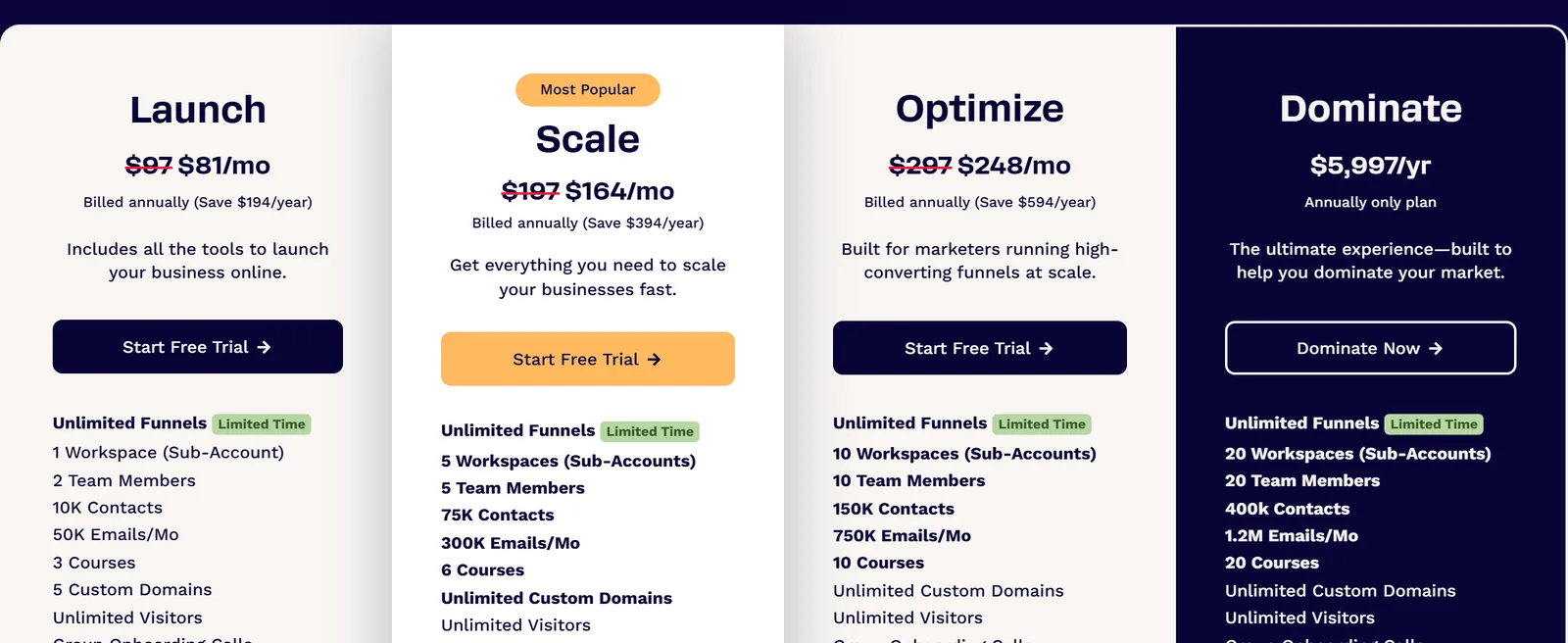
- Pricing: Launch at $97 monthly or $81 monthly on the yearly bill, Scale at $197 or $164, Optimize at $297 or $248, Dominate at $5,997 a year only. The $99 three-month entry applies to Scale, whose normal rate is $197.
- Strength: the yearly rate is real and confirmed on the pricing page today, which puts a twelve-month Scale bill at $1,968 instead of $2,364, a $396 difference anyone can verify in two minutes.
- Drawback: the annual commitment locks the money for twelve months, and canceling mid-term returns account credit rather than cash, so a business that closes in month four has paid for a year.
Short on time? The twelve-month table answers the cost question before anything else.
Table of Contents
- What ClickFunnels Black Friday 2026 Actually Confirms
- The Two Offers Running Right Now, Priced Line by Line
- What Past Novembers Actually Showed
- Four Ways to Buy That Beat Waiting for a Banner
- What Twelve Months Costs at Three Business Sizes
- The Renewal Workflow to Build Before 27 November
- How We Score a Seasonal Software Deal
- What Happens on 1 December When the Promo Ends
- Who Should Move Before 27 November, and Who Should Wait
- FAQ
What ClickFunnels Black Friday 2026 Actually Confirms
Nothing named Black Friday or Cyber Monday is confirmed, because nothing named that exists on the site as of 18 November 2026. The sitemap holds 31 URLs and none contains black-friday or cyber-monday. The homepage mentions neither phrase. The changelog’s newest post, dated 13 November 2026, covers round-robin booking hosts and a redesigned contact page, with no promotion anywhere in the feed. Anyone publishing a specific percentage for a 2026 holiday sale is guessing.
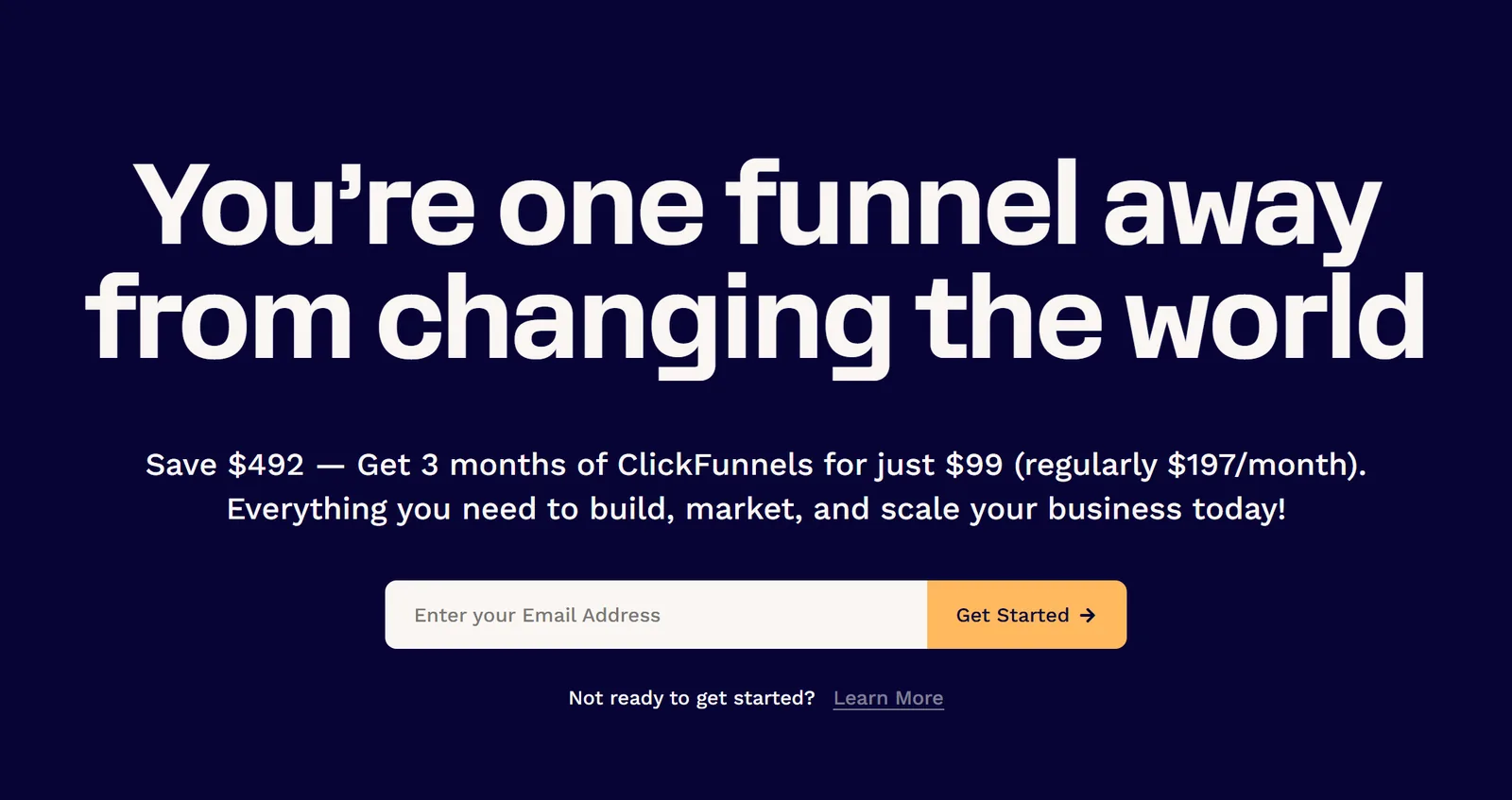
What is confirmed takes two forms. The first is the standard annual discount baked into the pricing page all year: pay for twelve months up front and the monthly equivalent drops by roughly 17 percent. The second is a promotional entry price of $99 for the first three months on Scale, presented on its own landing page as a $492 saving against the regular $197 monthly rate. The arithmetic holds: three months at the standard rate is $591, the offer charges $99, and the gap is $492 exactly.
Seasonal demand is real even when the vendor stays quiet. Google’s autocomplete for the phrase returns the bare query plus a sale variant, which means people type it into the search box every November regardless of what the company publishes. The practical consequence: a buyer searching now needs a page that says what exists today and what a past November looked like, so nobody waits for a countdown that may never appear. The ClickFunnels category collects every plan, trial and comparison walkthrough on this site for exactly that reason.
The Two Offers Running Right Now, Priced Line by Line
Both live offers reduce what a year costs, and they reduce it in different places. The annual toggle cuts the monthly rate by 16 to 17 percent on the three self-serve tiers. The $99 landing page cuts the first quarter to a third of its normal price on Scale alone, then hands the account back to the regular monthly rate in month four. A buyer comparing them is really choosing between a discount spread across twelve months and a discount loaded into the first three.
| Plan | Monthly | Yearly, per month | Yearly total | Vendor’s stated saving |
|---|---|---|---|---|
| Launch | $97 | $81 | $972 | $194 a year |
| Scale | $197 | $164 | $1,968 | $394 a year |
| Optimize | $297 | $248 | $2,976 | $594 a year |
| Dominate | Not sold monthly | Not sold monthly | $5,997 | Annual only |
One detail worth flagging because it survives a calculator check: the stated savings run two to six dollars above the real gap. Launch costs $1,164 over twelve monthly payments against $972 yearly, a difference of $192, while the page says $194. Optimize shows $588 against a claimed $594. The cause is rounding on the monthly equivalent, since $81 is really $81.00 and the yearly figure divides unevenly. The direction of the claim is honest even where the last digit drifts.
Then there is the $99 route. It sits on a separate page that describes three months of ClickFunnels at $99 against a regular $197 monthly rate, and Wayback Machine captures show the same page alive in September 2025 and still serving traffic in October 2026. That continuity matters: a promotion that has survived thirteen months is a standing entry price, so nobody has to buy it this week out of fear. The account moves to $197 in month four unless the buyer switches to the yearly bill.
What Past Novembers Actually Showed
Archived copies of the site make the pattern readable. On 24 November 2023, the Friday of that year’s holiday week, the homepage carried a strip reading Limited Time: Save BIG With the Funnel Hacker Plan. That is the only seasonal banner found in any November capture, and it never uses the words Black Friday. The offer it pushed was a plan bundle rather than a sitewide percentage, which fits a company that prefers packaging over blanket markdowns.
The 2024 holiday week tells a quieter story. A capture of the pricing page from 25 November 2024 contains zero instances of either holiday phrase. The plan names that year were Startup and Pro, priced $97 and $297 monthly, and the page advertised the same annual toggle that exists today. A shopper arriving on that date in 2024 found no holiday treatment at all on the page where a discount would live.
No archive capture exists for a dedicated holiday URL on the domain, which is why claims about a recurring 50 percent event do not hold up. The realistic read after checking three Novembers: the company discounts through annual billing and through entry-price landing pages, and it does not run a sitewide holiday markdown. A buyer who plans around that pattern will not be disappointed on 27 November, and a buyer who waits for a banner may still be waiting on 30 November.
Four Ways to Buy That Beat Waiting for a Banner
Each route below is priced from the pages that exist today, and each one suits a different cash position. None of them requires a discount code, an email list signup or a purchase through a third-party deal site. Read the four in order and pick the one whose cash flow matches the next twelve months of the business rather than the next seven days of the calendar.
Take the yearly bill when the plan is already decided
A business that has already chosen its tier should switch the pricing toggle to yearly and stop reading. On Scale the switch saves $396 across twelve months, which is more than two months of service for free. The catch sits in the cancellation terms: the money is committed, and a mid-term exit returns account credit instead of cash, so the decision should rest on a plan the business expects to keep running past next summer.
Use the $99 entry when the first quarter is the risky part
New funnel projects usually fail in the first ninety days, not in month nine. Paying $99 for that window keeps $492 in the business while the first offer gets tested, and the buyer keeps the option to walk away in month four without having prepaid a year. This route suits a coach launching a first cohort or an agency proving a funnel model on one client before committing further.
Start on Launch and upgrade when a limit bites
Launch carries one workspace, two team members, 10,000 contacts and 50,000 emails a month. A single-funnel business stays inside those numbers for months, and the $972 yearly bill is the smallest committed amount on the page. The upgrade path matters more than the entry price: moving to Scale later costs nothing extra in setup, and the limits, not the calendar, decide when the move happens.
Two rival philosophies show up whenever a buyer hesitates at this point, and each one solves a problem this platform leaves open. GoHighLevel wins agencies that need a CRM, shared calendars and separate client workspaces under one roof, because the account is built to resell rather than to sell one business. Systeme.io wins the operator who wants courses, funnels and email in one light account without learning a builder first, trading depth for speed. Neither advantage is a price argument; both are structural, which is why a Black Friday discount never settles the choice.
The same comparison against a competitor’s bundle is a separate exercise, and the business growth section holds the pricing math for teams weighing an all-in-one stack against two cheaper tools. For this decision the relevant number is what twelve months costs at the size the business will actually be in June, which the next section calculates.
Want to test the funnel builder on your own offer first?
Two smaller costs ride alongside the plan fee and never appear in a headline. Payment processing runs through the merchant account the business already uses, so Stripe or PayPal takes its usual cut on every order bump and upsell rather than a platform surcharge. Paid funnel templates are optional, and the free library covers a launch without spending anything extra. Budget the plan fee plus the overage line and the stack is fully funded.
What Twelve Months Costs at Three Business Sizes
Three buyer profiles cover most of the traffic this page receives: a solo operator running one funnel, a coach running three funnels with a mailing list, and a small agency running several client workspaces. The table below puts the plan fee, the email overage and the entry-price route side by side for a full year, all calculated from the rates checked on 18 November 2026 rather than estimated.
The coach row carries the one cost buyers forget. Scale includes 300,000 emails a month, and a list of 25,000 contacts mailed twelve times a month reaches 300,000 exactly. Push past that ceiling and overage runs $0.675 per thousand emails, so an extra 100,000 messages adds $67.50 monthly and $810 across the year. That single line changes the cheapest route: the $99 entry plus nine standard months costs $1,872 in plan fees, and the overage pushes the real total to $2,682.
| Profile | Pay monthly, 12 months | Pay yearly | $99 entry then standard |
|---|---|---|---|
| Solo, Launch, one funnel | $1,164 | $972 | Not applicable to Launch |
| Coach, Scale, 400K emails monthly | $3,174 | $2,778 | $2,682 |
| Agency, Optimize, ten workspaces | $3,564 | $2,976 | $2,772 |
Real bills rarely land on the midpoint, so all three routes were recalculated at 20 percent above and below the plan fee. The ranking holds across the whole band: the cheaper tier wins at every point, and the yearly bill stays ahead of monthly payments in both directions.
| Profile and route | Minus 20% | Checked figure | Plus 20% |
|---|---|---|---|
| Solo, yearly Launch | $778 | $972 | $1,166 |
| Solo, monthly Launch | $931 | $1,164 | $1,397 |
| Coach, yearly Scale with overage | $2,222 | $2,778 | $3,334 |
| Coach, $99 entry with overage | $2,146 | $2,682 | $3,218 |
| Agency, yearly Optimize | $2,381 | $2,976 | $3,571 |
Ready to price it against your own numbers? The offer page shows the current rate.
The Renewal Workflow to Build Before 27 November
Buying in the holiday window only pays off if the funnel behind it keeps selling into January, and that means a follow-up sequence built once and left running. Imagine a two-person course business in Austin, Texas, selling a $497 cohort three times a year, with 1,400 people on the list and an average of 60 form fills per launch. Half of those fills arrive after 9 pm, and the owners answer them the next morning, by which point the prospect has booked a call with a competitor. The scenario below is an illustrative build, not a customer story, and the numbers are there to show the shape of the sequence.
Set it up inside the Workflows app, keep every step to one action, and leave the sequence running through the holidays so a Black Friday visitor who never buys still hears from the business in December. The eight steps below take about forty minutes to assemble the first time.
- Trigger: a new contact is created from the holiday landing page form, with the form name recorded on the contact so every later step can check the source.
- Action: send the first email within one minute, containing the price, the cohort date and one link back to the checkout page.
- Wait: two hours, which catches evening form fills before the prospect goes to bed.
- If/Else: check whether the contact has the tag Checkout Started. If yes, skip to the cart step. If no, continue to the next message.
- Action: send a text message with a single question about the cohort date, and add the tag Answered Date to every reply.
- Wait: three days, then send an email that answers the two objections raised most often on calls, the time commitment and the refund window.
- Action: create an opportunity in the pipeline at the stage Called Once, and assign it to the owner who handles the timezone.
- Wait: until 48 hours before the cohort closes, then send the final reminder and remove anyone tagged Enrolled from the sequence.
How We Score a Seasonal Software Deal
A discount is only worth its percentage when the product underneath earns the price, so every deal on this site is scored on the five criteria that decide whether a funnel business keeps the subscription past month three. The weights below come from the review method used across this site, and a cheap plan on a tool that fails the first three criteria never scores well, no matter how large the holiday percentage looks.
| Criterion | Weight | What earns the points |
|---|---|---|
| Funnel builder and templates | 25% | Editor speed, template depth, A/B testing on live pages |
| Checkout and payments | 20% | One-click upsells, order bumps, payment options, tax handling |
| Email and automation | 20% | Workflow depth, deliverability, overage pricing at scale |
| Courses and community | 15% | Course limits per tier, community tools, member access control |
| Value for money | 20% | Twelve-month cost at the buyer’s real size, not the entry price |
On a holiday page the weights shift slightly, and it is worth saying so rather than presenting a fixed table. Value for money carries more weight here than in a standard review, because the whole question is whether to prepay twelve months in November or drip the fee month by month. Funnel builder and templates carry the same weight either way: a discount on an editor that slows a launch costs more than the 17 percent it saves.
Two criteria punish the discount routes differently. Value for money rewards the yearly bill, since a 17 percent cut is a permanent improvement rather than a one-quarter gift. Email and automation punishes the small tier, because Launch caps out at 50,000 messages and a growing list hits that ceiling within weeks of a good launch. A buyer scoring their own situation should weigh those two rows first.
What Happens on 1 December When the Promo Ends
Nothing dramatic happens to an account bought at the $99 entry: month four bills at $197 and the service continues without interruption. The billing page shows the next charge date, and switching to the yearly bill at any point before that date moves the account onto the discounted rate immediately. What does not happen is a refund of the difference if the buyer pays monthly for a year and then notices the yearly toggle, so the check belongs in month one rather than month eleven.
The refund window is the second thing to diary. A 30-day money-back guarantee applies from the moment the trial converts, and canceling inside that window returns the payment without penalty. Beyond it, a yearly buyer who leaves mid-term receives account credit rather than cash, which matters before prepaying for twelve months on a project that has not launched yet. The sales funnel section covers the checkout and upsell side of the platform for anyone still choosing a tier.
Who Should Move Before 27 November, and Who Should Wait
Two plans deserve a plain warning before anyone pays. Do not pick Launch if the list is expected to pass 10,000 contacts or the emails 50,000 a month inside the first quarter, because the upgrade arrives faster than the saving. Do not pick Optimize or Dominate for a single funnel with one owner, since the extra workspaces and seats bill every month whether or not a second brand exists. And do not pick any annual plan if the launch date is still undecided; the full review index holds the trial walkthroughs for that case.
Move now if the plan is already chosen and the only open question is which billing cycle to pick. The yearly toggle is live today, the saving is $396 on Scale across twelve months, and no holiday banner will improve on a discount the company keeps switched on all year. Move now as well if the first quarter is the part being funded, because the $99 entry has survived thirteen months of captures and does not depend on a date.
Wait if the funnel idea is still a sketch and no offer has been tested in front of real buyers. A prepaid year on an unvalidated funnel is the most expensive mistake in this category, and a free trial settles the question for nothing. Wait too if the business already runs a field service or CRM system that handles the customer record, because the value of this platform drops sharply when it becomes a second place to look.
If the timing fits your renewal cycle, this is the cheapest entry point today.
FAQ
Does ClickFunnels run a Black Friday sale in 2026?
No announcement exists as of 18 November 2026. The sitemap, homepage and changelog carry no holiday page or promotion, so any specific percentage circulating online is unsourced. The two standing discounts remain the annual billing rate and the $99 entry price.
Is the $99 for three months offer still live?
Yes, checked on 18 November 2026. The entry page still charges $99 for the first quarter, and the saving it advertises against full price is $492. Scale is the tier involved, and normal billing resumes once those three months finish.
Is it cheaper to pay monthly or yearly?
Yearly is cheaper on all three self-serve tiers, by $192 on Launch, $396 on Scale and $588 on Optimize across twelve months. The trade-off is commitment, since a mid-term exit returns account credit rather than money.
What happens to my price after the promotional quarter ends?
The account moves to $197 monthly on Scale unless the buyer switches to annual billing first. Nothing is canceled and no new contract appears. A calendar note for day 85 avoids the surprise.
Can I get the annual rate later in the year?
Yes. The toggle stays on the pricing page regardless of season, and switching from monthly to yearly is available from the billing settings at any point. The saving then applies from the next billing date rather than retroactively.
Is the 30-day money-back guarantee real?
The pricing page states it plainly: cancel inside 30 days of the trial converting and the payment returns without penalty or fee. Requests go through support, so keep the confirmation email from the first charge.
Still weighing it up after those six answers? Run one real funnel through a free account before the month ends.
← Previous: ClickFunnels guides and pricing walkthroughs
About the Author

Antonio Vance is B2B SaaS Operations Director & Lead Reviewer (SaaSPipeLab Editorial Team). He has spent 8+ years deploying and auditing enterprise CRM, marketing automation, and email deliverability infrastructures for digital agencies, including the funnels, checkouts, and follow-up sequences built on top of them. At SaaSPipeLab, he tests ClickFunnels and competing funnel builders hands-on to deliver field-verified reviews and tutorials.
Some links on this page are affiliate links, including links to ClickFunnels, so we may earn a commission at no extra cost to you; this never changes our scores or recommendations.
Yearly rate beats the holiday banner